If you’re concerned about mold in your home, you may have heard about mold air testing. But many homeowners aren’t sure what these tests actually measure or how to interpret the results.
Here’s a clear explanation of how mold air sampling works and what you can realistically learn from it.
Mold air sampling collects airborne particles from the air in specific areas of a home. These samples are analyzed by an accredited laboratory to identify and count mold spores.
The laboratory used for analysis is ISO-certified, meaning it meets internationally recognized quality standards for laboratory testing and procedures. The lab also works with major medical and research institutions, including Mayo Clinic, providing an additional layer of credibility and reliability to the analysis.
Because mold exists naturally outdoors, a sample of outdoor air is collected at the same time. This outdoor sample provides a normal environmental reference for comparison.
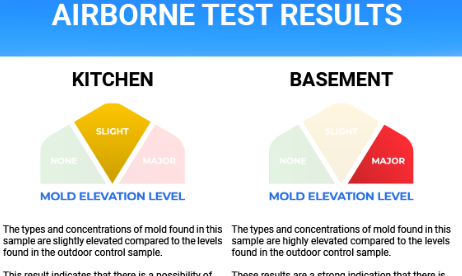
The goal is not to measure all mold in a home, but to evaluate whether indoor air appears typical compared to outdoor air at the time of testing.
Mold spores are always present in the environment. Even clean homes contain some mold spores that enter from outside through doors, windows, and ventilation.
In most healthy indoor environments:
• Indoor mold levels are similar to or lower than outdoor levels
• The types of mold indoors resemble outdoor types
When indoor levels are significantly higher than outdoor levels, or when different mold types appear indoors, it may suggest an indoor moisture source.
Air sampling can help determine:
• Whether indoor mold levels are elevated
• Whether indoor air differs from outdoor air
• Whether moisture-associated molds are present
• Whether further evaluation may be needed
This makes sampling a useful screening tool when there are odors, moisture concerns, or indoor air quality questions.
Mold air sampling does not:
• Locate hidden mold
• Measure how much mold exists in a home
• Determine how long mold has been present
• Assess building materials
• Diagnose health conditions
It provides information about airborne spores only, not all mold in a structure.
Each air sample reflects conditions in the specific room or area tested at that moment.
Homes are not uniform environments. Mold levels can vary by:
• Floor level
• Moisture exposure
• HVAC airflow
• Room use
• Ventilation
For this reason, results apply only to the sampled locations, not the entire home.
Yes. Outdoor mold levels change throughout the year.
In winter, outdoor mold levels are typically very low.
In summer and fall, outdoor mold levels are much higher.
Because indoor results are compared to outdoor conditions at the time of testing, season naturally influences interpretation. This is why outdoor reference samples are always collected during professional testing.
Mold sampling is often useful when:
• There is a musty odor
• Moisture or leaks have occurred
• Residents have air quality concerns
• There is visible staining of unknown origin
• After water events or remediation
It helps determine whether indoor air appears typical or elevated.
If indoor mold levels are elevated or unusual types are detected, additional evaluation by a qualified mold inspector or remediation professional may be recommended.
Sampling is a first step in understanding indoor air conditions, not a full structural assessment.
Mold air sampling answers one key question:
Does indoor air look normal compared to outdoor air right now?
If yes, indoor mold conditions are likely typical.
If not, further investigation may be appropriate.
If you have concerns about indoor air quality or possible mold in your home, professional sampling can provide useful screening information and peace of mind.
Ohana Clean offers professional mold air sampling in the Twin Cities using laboratory analysis from an ISO-certified lab used by institutions including Mayo Clinic.