Short answer: Professional carpet cleaning cannot treat allergies or asthma, but it can remove a surprising amount of dust, pollen, pet dander, grit, and other material stored in carpet. If you plan to keep your carpet, periodically removing that buildup is a practical part of keeping the home cleaner.
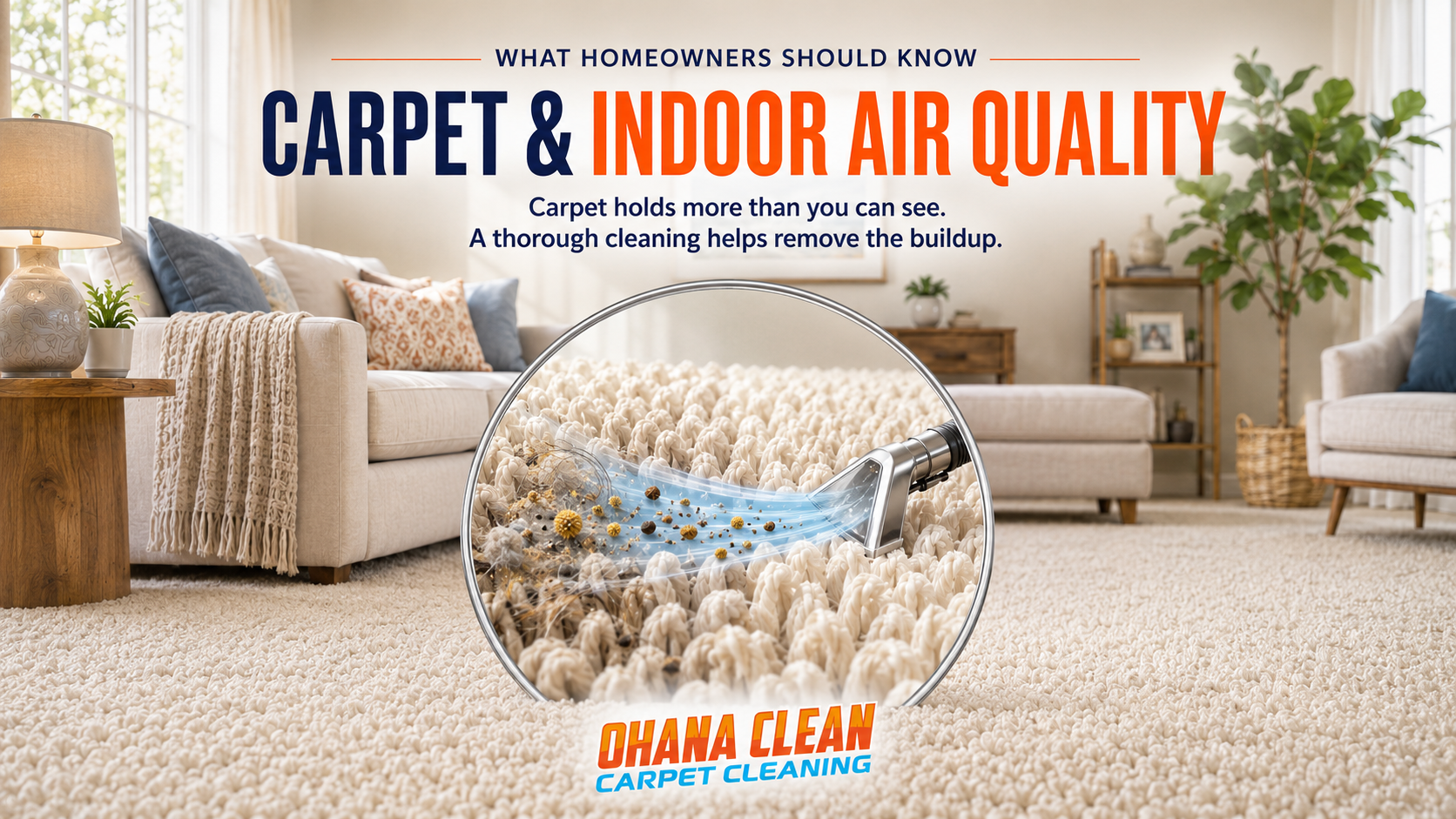
Carpet can look clean from across the room while still holding a lot of material below the surface. Every day, shoes, pets, open doors, clothing, and normal household activity bring in fine particles that settle into the fibers.
Regular vacuuming is important, but it does not always remove everything that has settled deeper or attached itself to oily, sticky soil. That is where a thorough professional cleaning can make a meaningful difference.
At Ohana Clean, we keep the promise simple: we can remove accumulated soil from the carpet. We will not tell you that cleaning can cure allergies, prevent asthma attacks, or make a home allergen-free.
Carpet can hold ordinary household dust, tracked-in soil, pollen, pet hair and dander, skin flakes, food particles, and residue from spills or past cleaning products. Here in Minnesota, sand and road salt can add even more grit during the winter.
Some of that material stays near the surface and comes out with routine vacuuming. Some settles deeper into the pile or clings to soil that a vacuum alone cannot remove. Normal activity can also disturb part of what has collected there.
This does not mean carpet is automatically bad for indoor air quality. It means carpet needs maintenance. The EPA describes carpet as a reservoir for particles, which is more accurate than calling it a whole-room air filter. The goal is not merely to trap the buildup; it is to remove it.
A quick wet pass is not the same as a complete cleaning. Our process is designed to remove both loose soil and the sticky material that holds fine particles in the carpet:
The goal is not to cover the carpet with fragrance or make it look better for a few days. It is to physically remove as much accumulated material as the carpet and the condition allow.
Possibly, but no carpet cleaner can promise that. Whether someone feels different afterward depends on what triggers that person and how much the carpet was contributing. Carpet is only one surface in a home, and allergies and asthma are different for everyone.
Research supports the idea that carpet can store dust and allergens and that some of that material can be stirred up during normal activity. What the research does not prove is that professional carpet cleaning will improve a particular person's symptoms.
We can promise to clean the carpet thoroughly. We cannot honestly promise a medical result. If symptoms are serious, worsening, or unexplained, the right person to speak with is a qualified healthcare professional.
You do not need a medical reason to remove accumulated material from carpet. Professional cleaning may be especially worthwhile when:
There is no single cleaning schedule that fits every home. Traffic, pets, carpet color, manufacturer guidance, and how well the carpet is vacuumed all matter. Its condition often tells you more than the calendar does.
The machine helps, but the machine is not the entire difference. Results also depend on inspection, vacuuming, the right cleaning solution, enough time for it to work, proper agitation, a thorough rinse, and careful extraction.
At Ohana Clean, that complete process is our standard, not an upgrade. We do not offer a watered-down cleaning and then pressure you into the service your carpet actually needed. We inspect first, explain what we see, and adjust the cleaning to the carpet in front of us.
We also believe honest limitations are part of good service. If we find ongoing moisture, visible mold, or contamination below the carpet that ordinary cleaning cannot solve, we will tell you. Our goal is to help you make the right decision for your home, not to make carpet cleaning sound like the answer to every problem.
Carpet cleaning is not asthma treatment. It is source removal. It removes dust, pollen, pet material, grit, and other soil from one of the largest fabric surfaces in the home.
If you are keeping the carpet, leaving years of buildup in it makes little sense. Regular vacuuming and periodic thorough cleaning are practical ways to maintain it and keep the home cleaner.
If you are not sure whether your carpet needs professional cleaning, we are happy to give you a straightforward opinion. No scare tactics and no medical promises - just an honest recommendation based on the condition of the carpet.
Ready for a cleaner carpet?
Request a quote online or call/text (612) 888‑8807. Ohana Clean is an IICRC Certified Firm serving Minneapolis, St. Paul, and the broader Twin Cities metro.
Sources and further reading: U.S. EPA carpet and indoor-air guidance; independent review of carpet, indoor air, and health research; and CRI 205 residential carpet-maintenance guidance.
Originally published April 1, 2024. Updated August 6, 2026.